Troubleshooting
Signs Your Heater May Need Repair
Review temperature changes, noises, leaks, and other warning signs worth noting.
Read guide
On-demand units save space and heat water only when needed, yet ignition faults, scale, and error codes can interrupt the supply.
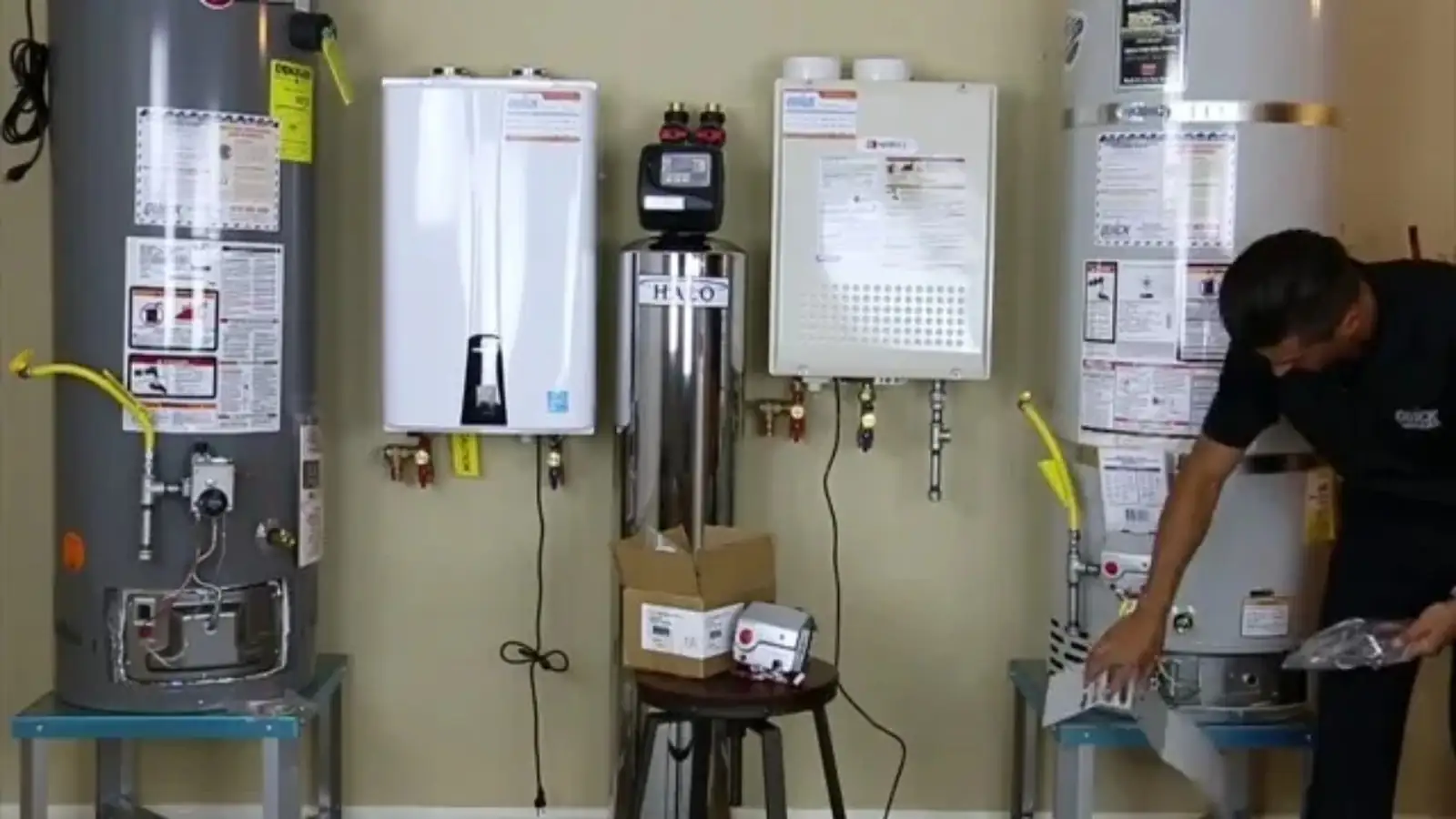
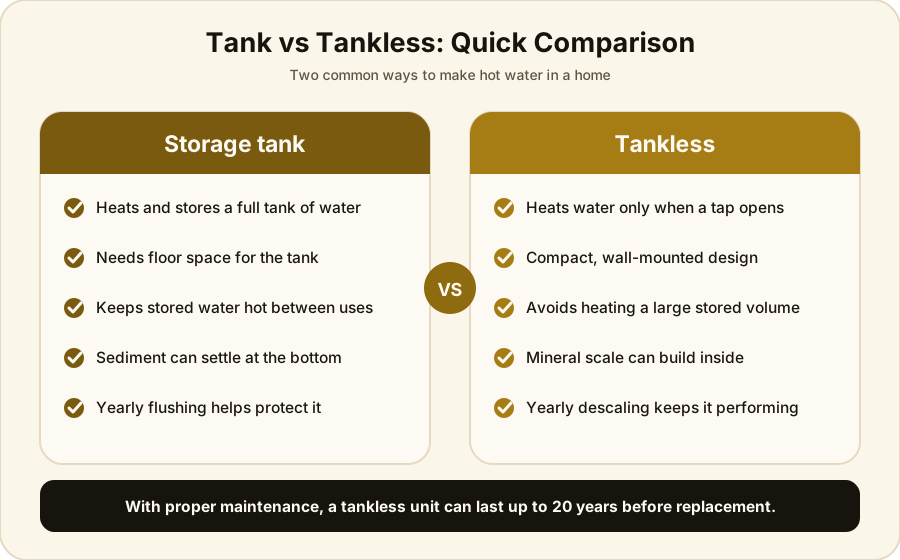
Tankless units have changed how many homeowners think about hot water. With no bulky storage tank they save floor space, and because water is heated only when a tap opens, they avoid the standby energy a tank uses.
Even so, a tankless unit still needs regular care. Mineral scale, ignition faults, venting problems, or sensor errors can reduce output or trigger a shutdown. Comparing the two designs side by side is easier with the tank vs. tankless guide.
Scale forms inside the heat exchanger as water is heated, and it narrows the passages that carry heat. Flushing and descaling each year keeps performance steady and protects the unit's longevity. With proper maintenance, a tankless unit can last up to 20 years before replacement.
A technician reads the fault history, checks the gas or electric supply, inspects the venting, and tests flow and temperature rise. If scale is present, a descaling flush is usually recommended before parts are replaced.
Nearby topics include installation, gas unit repair, electric unit repair, and sediment flushing. Return to the Garden City hot water repair overview or browse all service topics.
Yearly flushing and descaling is the common recommendation, and it matters most where scale builds quickly.
Scale, low flow, a faulty sensor, or very short hot water runs can cause temperature swings. Diagnosis finds which one applies.
Many are, since they can last for years with maintenance. A technician can compare repair value with the unit's age.
Each suits different homes. Tankless saves space and heats on demand, while a tank can be simpler to swap like for like.
Call to describe what changed and ask about scheduling in Garden City, NY.
Practical information to help describe symptoms and prepare questions.
Review temperature changes, noises, leaks, and other warning signs worth noting.
Read guideCompare design, capacity, space, and maintenance for each type.
Read guideLearn how to reduce risk and what to tell a technician about a leak.
Read guide